
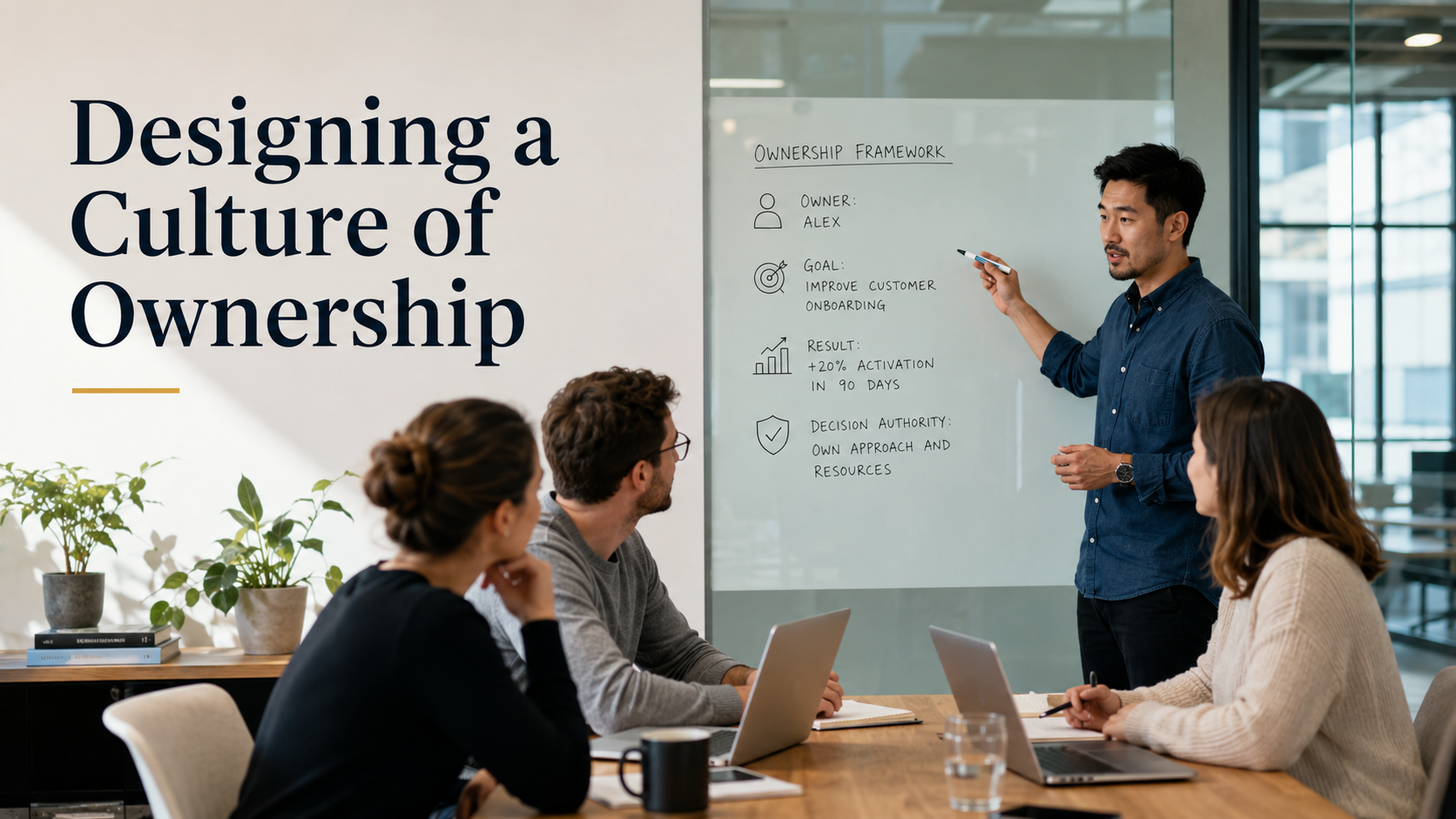
Ownership is not a slogan or poster. It’s an act and rhythm of thinking and acting. When someone really owns an outcome, they anticipate issues, make trade-offs, and ultimately make better decisions alone. A manager’s role is to make that happen-in all projects, all the time. What follows is how to truly embed ownership:
Give results not tasks
It all starts with how work is framed. Don’t give someone a checklist of things to do. Tell them what you are trying to achieve, who is benefiting and how will you know if you have been successful. This single line sentence can pull so much weight: “Shorten onboarding from twelve to seven days for new customers”. This provides context, direction, and desired outcome.
Then step away, and allow them to design their solution. Ask them what they will do first, what will they try in two weeks time, and when will they need your input. This keeps control with them, while allowing you visibility. Where they are stuck, guide with questions rather than dictating a solution. They should believe they derived the answer themselves.
Define the owner and what’s their realm of control
Each project should have only one, named owner, and a list of what they can decide without permission. Clearly state: “Maya owns this project. She can vary scope, but stay within budget, select any vendor up to $5k, and make the final decisions regarding delivery”.
Only set critical boundaries (legal, branding, or large expenditure), and let them do the rest. If someone asks for a decision, simply redirect them to the owner in chat. They will naturally transition away from the manager for simple decision-making.
Make results transparent
Track key indicators like cycle time, quality, adoption, or revenue changes in one place. The bi-weekly update is enough; nothing more.
It is critical to avoid being judgmental. Do not ‘call out’ negative results. They should be learning moments. “What did we learn from this outcome?” will solicit curiosity rather than defense. They will begin to clearly see the connection between their choices and the results that are achieved.

Reward actions and authentic learning
if praise is only given when perfection is achieved, the risk taking will cease. Small steps, a quick demo, andsmarttrade-offsshould be celebrated.When failures happen, review them quickly, document how they should be handled differently in the future, and thank the owner for their candor.
Quick turns of results can create an ownership culture. A pilot, a prototype, a limited launch, and these provide safe opportunities for action and adaptation.imited rollout, each one gives space to act, and pivot.
Remove obstacles, don’t create them
Managers can cultivate ownership by removing roadblocks. Respond quickly and effectively to actual issues. A same-day turnaround on a call or quick review of a document will empower their work. If an obstacle recurs across multiple projects, take the steps necessary to remove it systematically.
Monitor handoffs between teams. Where there is a lack of clear ownership on a flow, assign a temporary end-to-end owner who stays with the project until the system has stabilized. A customer gets one contact and that is where any feedback should be given. Once stabilized, normal lines of ownership can take over again.
Final thought
Ownership is built on structure, not rhetoric. Assign explicit owners and decision-making authority, track performance metrics for learning, reward initiative and open, honest learning, and eliminate road blocks.