Maya is an expert. Not because she tries to be, but because she’s been doing this so long that she knows every detail. She also works really hard to share that knowledge with anyone who needs it.
At most companies, it is called institutional knowledge. Everyone else calls it “ask Maya.”
Learning looks like small things
One reason employee learning is easy to overlook is because it doesn’t often feel like something big is happening. Learning is the onboarding meetings and short courses. It’s coaching sessions and written examples. Learning is the corrections people make while they’re working.
But stitch enough learning experiences together and eventually they become one of the company’s main advantages. Teams onboard better. They spot skill gaps earlier. They make fewer expensive mistakes. Skilled employees help the company move faster and feel less risky.
The work doesn’t change much
Here’s the truth about change at work: It doesn’t come with a warning bell. Suddenly there’s a new tool to learn. A customer expects something different. A process breaks. A competitor expands into your space quicker than expected.
When a company invests in learning, the people spending their days doing the work already have a path to update their skills. They’ve kept up with change before. Instead of rushing to respond to every change as if it’s an emergency, they work methodically to stay ahead of it. That allows the company to react without panic or distraction. That may not seem like a big deal. Until the day it is.
Knowledge doesn’t reside in one person
The benefits of employee learning grow when you pair it with a culture that values sharing knowledge. Any company can have a “Maya.” She’s the person who knows where everything is located. She knows how the processes work and which tricks to avoid. That’s great, but only until she’s busy, on vacation, or she leaves the company.
Learning helps companies spread knowledge around. It documents the steps and standards. Records the examples and shares judgment trapped in individual employees. Learning takes detailed knowledge that only a few people understand. And turns it into onboarding information that helps new employees get up to speed. Plus, it makes your team less fragile. More people can do the work, and they can do it well.
Guessing is replaced with good work
Here’s another benefit of shared knowledge: employees can spend more time doing their jobs, and less time wondering how to do their jobs. Lost productivity often happens one slice at a time. People ask the same questions, redo work, wait on others for answers, or make silly mistakes they could have asked about. Small productivity losses, that over time add up to a lot.
Learning helps people find answers before they get too confused to ask. It doesn’t replace experience. But it lets more employees reach competency faster. When knowledge is shared and learning is available, employees spend less time guessing what to do. And they spend more time doing it.
New hires don’t need a miracle
Imagine how many things someone has to learn when they start a new job. Not only do they have to understand their role, but also how it relates to the rest of the company. They have to learn the tools, the people, the goals, and the rules. Some of that is written down. Most of it is not.
Learning gives new employees a starting point. It guides them through the most important topics. Answers their questions before they even know they had them. Good learning explains what matters, where to go for more information, and who to talk to when they’re stuck with a specific problem. When onboarding isn’t reliant on whoever happens to be in the office that day, everyone benefits.
Skill gaps become visible
Employee learning also gives managers visibility into where knowledge gaps exist. Hidden skill gaps are expensive. They don’t come up during performance reviews or on project retrospectives. Instead they creep up on everyone as missed deadlines, slow decisions, misunderstood requests, or managers making requests and getting failed expectations in return. By the time someone notices there’s a problem, work has already been affected.
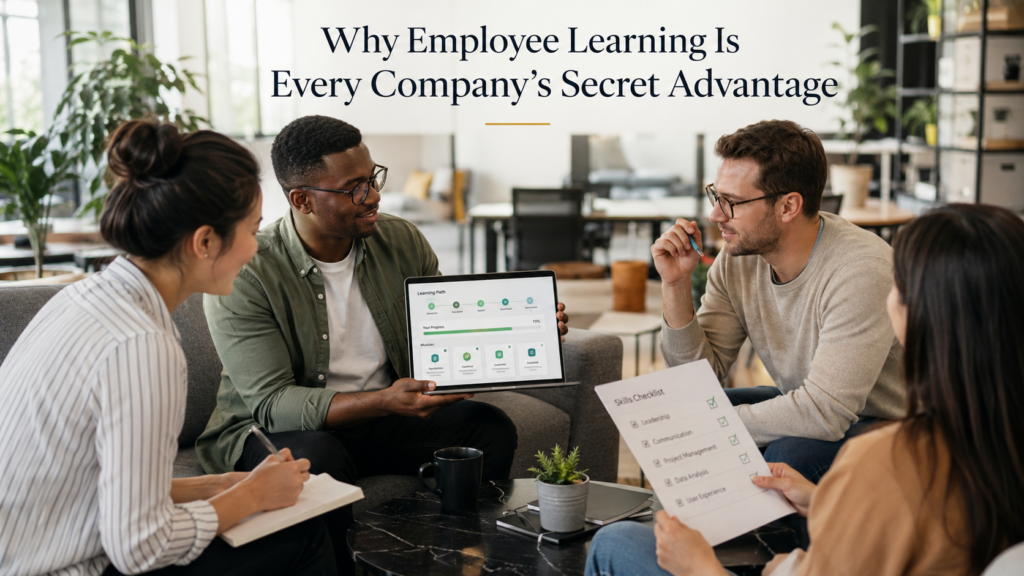
Learning sheds light on those gaps before they become problems. Progress through courses, quizzes and assessments, and hands-on exercises. And even manager feedback can pinpoint where employees need support. Instead of wondering who might need extra guidance, managers can easily see where learners are struggling. Instead of reacting to missing knowledge, companies can prepare in advance.
Risk is easier to avoid
Lastly, when you have employees working in spaces where mistakes are costly, employee learning helps. Safety instructions, privacy guidelines, and compliance standards all help mitigate risks. Parts of your company that can’t afford to make mistakes need learning procedures that are clear.
Easing that risk starts with making sure required knowledge is easy to assign, review, and track. But it doesn’t stop there. Managers also need to ensure the information doesn’t change every time someone accesses it. That way, when employees need to reference how something is done, they’re not deciphering poorly written documents.
Employee learning isn’t optional. Learning protects your company’s speed. It improves judgment. And it helps teams work more consistently.